
Co-designing evidence-based interventions in Kosovar context: Advancing our understanding throughout digital pathways
The prevalence of mental health problems in low- and middle-income countries (LMICs) remains high compared to countries with higher socio-economic status, where low socio-economic status continues to be an important predictor of poorer mental health outcomes, particularly among young people. This is often associated with limited access to professional services, fragmented healthcare systems, and low levels of mental health literacy around mental health services available in the respective communities.
Digitalization in the field of mental health presents both challenges and opportunities. On the one hand, there are limitations such as unequal access to technology, low levels of digital literacy, concerns regarding privacy and data security, and insufficient integration into existing healthcare systems. On the other hand, it offers unique opportunities to improve access to services, support early intervention, and provide more flexible and scalable mental health support through digital platforms and AI-based tools, helping to address some of the traditional barriers in mental healthcare.
To better understand the digital approach, NGO “Për Mendje të Shëndoshë” (PMSH) is implementing partner for the EU Horizon funded Reconnected project in Kosovo, that seeks to better understand how societal developments such migration, socio-economic status, geopolitical unrest shape European citizens mental health, from vulnerable backgrounds. Although promising in concept, adapting a large-scale project to the Kosovar cultural context represented one of the initial and key steps to ensure that the intervention is clearly understood, feasible, and capable of generating meaningful and representative data, particularly for populations with lower socio-economic status in Kosovo.
The first phase of implementation focused on selecting a stakeholder panel composed of representative informants, including clinical psychologists, healthcare workers, public health experts, social workers, professionals from juvenile correctional centres, and individuals with low socio-economic status. Guided by Reconnected Integrative Conceptual framework, five workshops with stakeholders panel were conducted between 2024 and 2025. The workshops focused on refining the integrative conceptual framework of the Reconnected project through the identification and analysis of key factors influencing mental health in the Kosovar context. More specifically, they focused on social and environmental challenges, living conditions, social determinants of mental health, as well as individual factors and how these interact to shape mental health outcomes in the low socio-economic population.
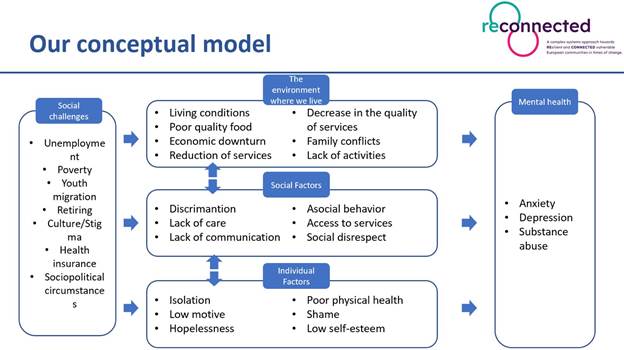
Throughout the workshops, the key social challenges considered in the adaptation of the reconnected project and to be considered in the selection and design of interventions included unemployment, poverty, youth-related issues, migration, retirement, culture and stigma, health insurance, and socio-political circumstances. Among the factors identified as interacting with mental health, from the environment background, emphasis was placed on living conditions, poor-quality food, economic downturn, reduction in available services, declining quality of services, family conflicts, and lack of meaningful activities. Among the social determinants of mental health that were highlighted, particular emphasis was placed on discrimination, lack of care and support, poor communication, antisocial behaviour, unequal access to services, and social disrespect. These factors were considered important in shaping individuals’ mental health experiences, as they influence both the availability and the quality of social support systems, as well as overall social inclusion and wellbeing within the community. Among the individual factors identified were social isolation, low motivation, hopelessness, poor physical health, feelings of shame, and low self-esteem. These factors were considered important in understanding how personal psychological and physical states contribute to mental health outcomes, particularly when combined with broader social and environmental stressors.
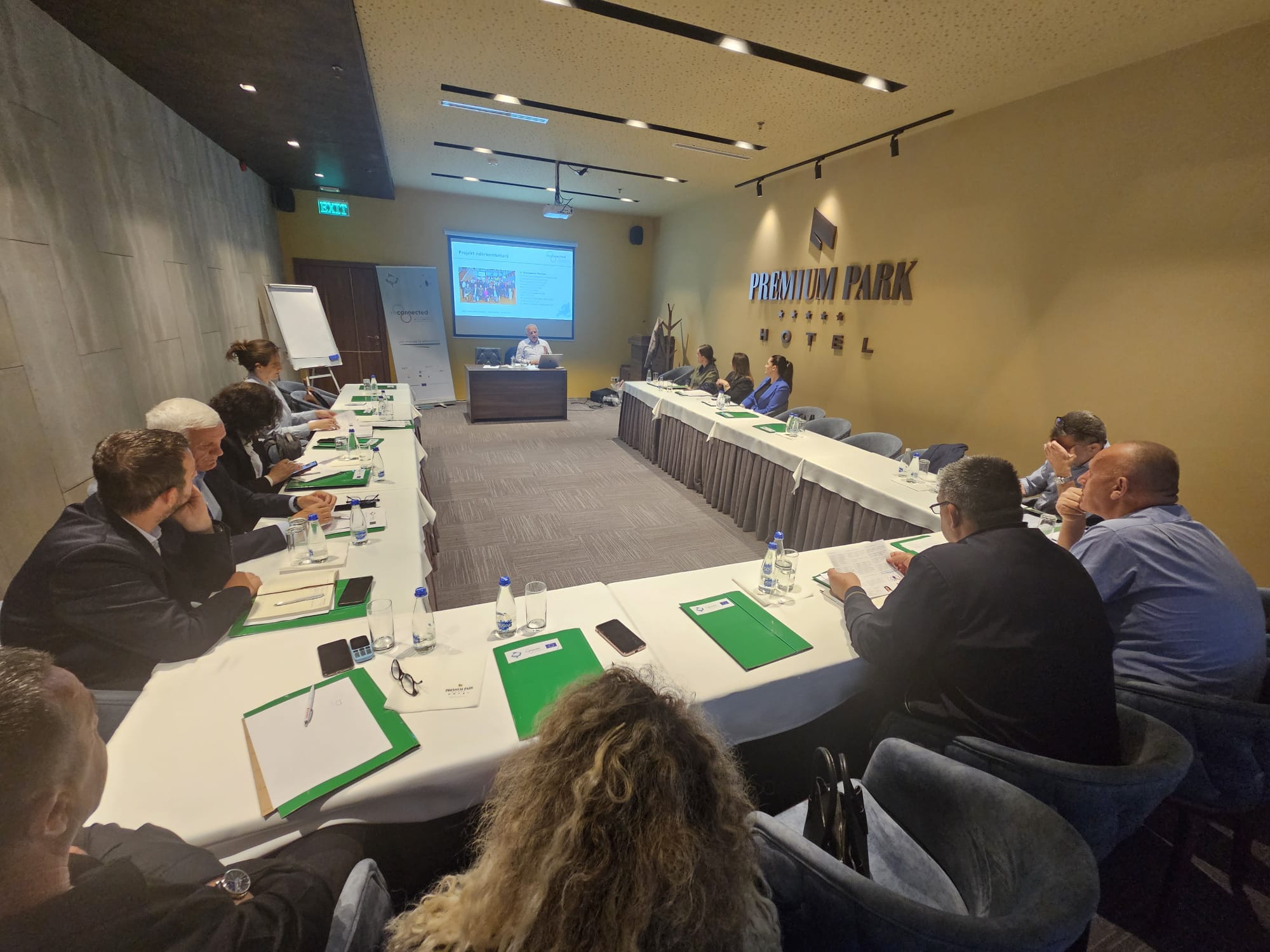
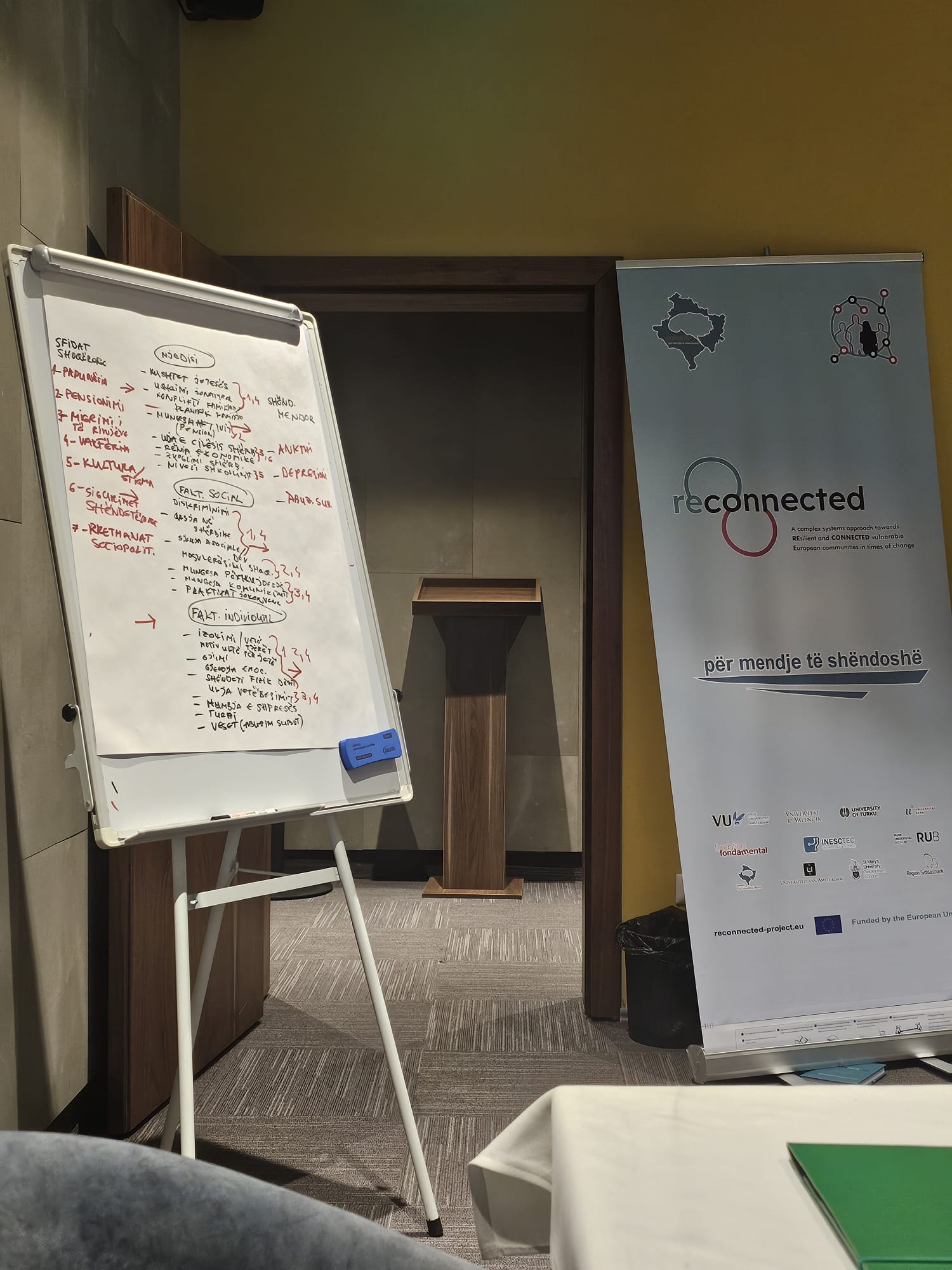
Stakeholders suggested that the factors described above are most strongly linked to mental health outcomes such as anxiety, depression, and substance abuse among individuals living in low socio-economic backgrounds. The reflections emerging from the co-design process suggest that this conceptual framework, along with the proposed adaptations, is representative of the Kosovar context. It should therefore be carefully considered in the cultural and digital adaptation of all implementation materials, including linguistic revision, as well as in the reporting of findings from both the CEMA observational study and the randomized trial, ensuring that both the conceptual and digital components of the intervention are appropriately aligned with local needs and realities.